
Dr. Arthur Laffer, Economic Advisor to 1st Global
 August 23, 2011 – Arthur Laffer, Ph.D., founder and chairman of Laffer Associates and economic advisor to 1st Global, was interviewed on CNBC along with Marshall Sonenshine, CEO of Sonenshine Partners. The nine-minute segment focused on tax rates and government revenues. This short video quickly crystallizes and demystifies the Laffer Curve’s continued validity in these times and illustrates that issues surrounding taxing the wealthy are “not religion, but math.”
IN COMPLIANCE WITH IRS CIRCULAR 230, WE ARE REQUIRED TO DECLARE THAT ANY WRITTEN TAX ADVICE CONTAINED IN THIS COMMUNICATION (INCLUDING ANY ATTACHMENTS) IS NOT INTENDED OR WRITTEN TO BE USED, AND CANNOT BE USED, FOR THE PURPOSE OF (1) AVOIDING ANY PENALTIES UNDER THE INTERNAL REVENUE CODE, OR (2) PROMOTING, MARKETING, OR RECOMMENDING TO ANOTHER PARTY ANY MATTERS ADDRESSED HEREIN. ANY WRITTEN ADVICE THAT WE PROVIDE DOES NOT TAKE INTO ACCOUNT THE POSSIBILITY THAT A TAX RETURN WILL NOT BE AUDITED, THAT AN ISSUE WILL NOT BE RAISED ON AUDIT, OR THAT AN ISSUE WILL BE RESOLVED THROUGH SETTLEMENT IF RAISED.
Securities through 1st Global Capital Corp., Member FINRA and SIPC. Bruce Rawdin-Baron and Steven W. Pollock are Registered Representative of 1st Global Capital Corp. Insurance services offered through 1st Global Insurance Services. Investment advisory services offered through Rawdin-Baron Financial, Inc. Rawdin-Baron Financial, Inc. and 1st Global Capital Corp. are unaffiliated entities. We currently have individuals licensed to offer securities in the states of Arizona, California, Illinois, Indiana, Kansas, Massachusetts, Michigan, New York, Oregon, and Washington. This is not an offer to sell securities in any other state or jurisdiction. CA Department of Insurance License: Bruce Rawdin-Baron #0736631, Steven W. Pollock #OE98073.
Disclosure
This material is for general information only and is not intended to provide specific advice or recommendations for any individual. There is no assurance the views or strategies discussed are suitable for all investors or will yield positive outcomes. Investing involves risks including possible loss of principal. Any company names noted herein are for educational purposes only.
All information is believed to be from reliable sources; however we make no representation as to its completeness or accuracy. All economic and performance data is historical and not indicative of future results. Market indices discussed are unmanaged. Investors cannot invest in unmanaged indices. Additional risks are associated with international investing, such as currency fluctuations, political and economic instability and differences in accounting standards.
Investing in securities in emerging markets involves special risks due to specific factors such as increased volatility, currency fluctuations and differences in auditing and other financial standards. Securities in emerging markets are volatile and can decline significantly in response to adverse issuer, political, regulatory, market, or economic developments.
An index is a statistical measure of change in an economy or a securities market. In the case of financial markets, an index is an imaginary portfolio of securities representing a particular market or a portion of it. Each index has its own calculation methodology and is usually expressed in terms of a change from a base value. Thus, the percentage change is more important than the actual numeric value. An investment cannot be made directly into an index.
Investing in fixed income securities involves credit and interest rate risk. When interest rates rise, bond prices generally fall. Investing in commodities may involve greater volatility and is not suitable for all investors. Investing in a non-diversified fund that concentrates holdings into fewer securities or industries involves greater risk than investing in a more diversified fund. The equity securities of small companies may not be traded as often as equity securities of large companies so they may be difficult or impossible to sell. Neither diversification nor asset allocation assure a profit or protect against a loss in declining markets. Past performance is not an indicator of future results.
Financial Planning offered through Reason Financial, a state Registered Investment Advisor. Investment advice offered through Merit Financial Group, LLC an SEC Registered Investment Advisor. Merit Financial Group and Reason Financial are separate entities. Tax related services offered through Reason Tax Group. Reason Tax Group is a separate legal entity and not affiliated with Merit Financial Group, LLC. Sean P. Storck CA Insurance Lic#OF25995 and Steven W. Pollock CA Insurance Lic#OE98073
Copyright © 2026 Reason Financial all rights reserved.
Continue Reading
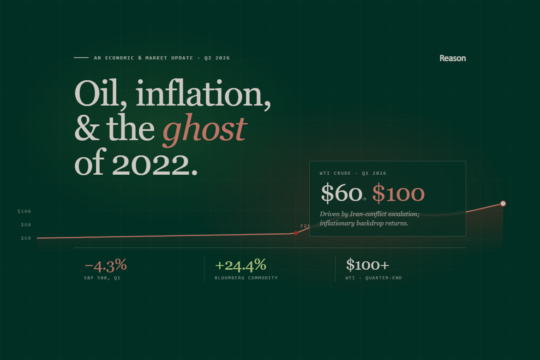
2nd Quarter 2026 – Economic and Market Update
Q1 2026 in review: oil shock, S&P 500 down 4.3%, commodities up 24.4%, the cease-fire that became a blockade — and the planning moves that matter most coming out of a quarter like this one.
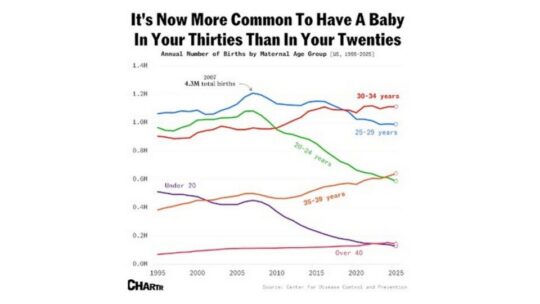
It’s Now More Common To Have A Baby In Your Thirties Than In Your Twenties
DisclosureThis material is for general information only and is not intended to provide specific advice or recommendations for any individual.…

When Does Refinancing Actually Make Sense? A 2026 Reality Check
If you locked in a mortgage at 7% or higher in 2023 or 2024, you’ve probably been watching rates with…