
Tax Planning for a Business Owner Selling Their Company in San Diego
How can I reduce taxes when selling my business? Start planning before you sign a letter of intent. Whether you sell assets or stock, how the price is allocated, how your entity is taxed, whether you are paid over time, and where you live all shape the result. California taxes capital gains as ordinary income, so plan state tax separately (FTB).
At Reason Financial and Tax in San Diego, CPA, EA and CFP® professionals work on the tax and financial sides together. This page is general education, not advice for your situation.
Key takeaways
- Many tax decisions are hard to change once deal terms are set, so start before the letter of intent.
- In an asset sale, each asset is taxed by its own character, and buyer and seller generally both report the price allocation on Form 8594 (IRS).
- Selling corporate stock usually produces capital gain or loss; part of the gain on a partnership interest can be ordinary income (IRS).
- An installment sale can spread gain over the years you are paid, but depreciation recapture is reported in the year of sale (IRS Topic 705).
- California has no lower capital-gains rate and does not follow the federal QSBS exclusion (FTB).
- Bring your CPA, financial planner and attorney together before you negotiate price.
Reason Financial and Tax · 4747 Morena Blvd, Ste 102, San Diego, CA 92117 · (858) 483-7500 · Mon to Fri, 9 AM to 5 PM
Who this page is for
This page is for owners of closely held companies in San Diego County: LLCs, S corporations, C corporations, partnerships, and sole proprietorships. You might be thinking about a sale, in the middle of negotiating one, or just signed. Either way, you probably want to know which tax questions to raise with your advisors.
When should you start tax planning for a business sale?
If you can, start before you sign a letter of intent. Many of the levers below are hard or impossible to change once terms are agreed: entity structure, deal form, payment terms, residency, timing of the closing year, and estate and charitable planning. Starting early also gives your CPA time to clean up the records a buyer will examine.
- A practical place to start is a simple pile of paper: current-year and prior-year returns, entity documents and cap table, basis records for your ownership interest, fixed-asset/depreciation schedules, and any draft term sheet.
Asset sale vs. stock sale: how is each taxed?
The form of the deal changes how your gain is characterized. Per the IRS, the sale of a business is generally not treated as the sale of a single asset: "Generally, when this occurs, each asset is treated as being sold separately for determining the treatment of gain or loss." Capital assets produce capital gain or loss; real property or depreciable property used in the business held longer than one year is a section 1231 transaction; and "the sale of inventory results in ordinary income or loss" (IRS: Sale of a business).
Asset sale
Asset sale: capital assets give capital gain or loss; section 1231 property is a section 1231 transaction; inventory gives ordinary income or loss.
Corporate stock
Corporate stock: usually capital gain or loss.
Partnership interest
Partnership interest: a capital asset when sold, except the part of the gain from unrealized receivables or inventory items, which is ordinary.
Asset sale and Form 8594 price allocation
Buyer and seller must allocate the price among business assets using the residual method, and both generally report the allocation on Form 8594 (IRS Form 8594). How much is allocated to goodwill versus equipment or inventory can change your tax result, so the allocation is a negotiation point.
Stock or ownership-interest sale
The IRS notes that selling corporate stock usually results in capital gain or loss, and that a partnership interest is a capital asset when sold, except that the part of the gain from unrealized receivables or inventory items is treated as ordinary (IRS: Sale of a business).
Buyers and sellers often prefer different structures. Talk through the trade-offs with your CPA and attorney before you negotiate price.
How does your entity type affect taxes on a sale?
How your company is taxed (C corporation, S corporation, partnership/LLC, or sole proprietorship) affects what is being sold and who is taxed.
Reason's tax team prepares returns for corporations, partnerships and LLCs, and offers entity-structuring planning (Tax Planning & Preparation).
C corporations
For a C corporation, the IRS explains that gain is generally recognized by the corporation on a liquidating sale of its assets, and gain is generally also recognized on a liquidating distribution to the owner (IRS: Sale of a business). Ask your CPA how that applies to your structure.
S corporations and partnerships
For S corporations and partnerships, treatment depends on the deal form and on the underlying assets (see above). California generally follows an entity's federal S-corporation status, and basis can differ between federal and California returns (FTB Sch. D (540NR) instructions).
Net investment income tax (NIIT)
Net investment income tax (NIIT) may or may not apply depending on facts; the IRS lists "generally net gains from the sale of an active partnership or S corporation ownership interests" among net investment income items while stating the tax "doesn't apply to … income from an active business" (IRS Topic 559). It's a good example of a question to work through with a professional.
How does an installment sale work for taxes?
If you receive at least one payment after the year of the sale, the IRS says you generally must report gain under the installment method unless you elect out, and you include only the part of the gain you receive each year (IRS Topic 705). Here are the key limits the IRS lists:
- The installment method is not allowed for sales that result in a loss, or for inventory or publicly traded stock and securities.
- Gain that is ordinary income under the depreciation recapture rules must be reported in the year of sale.
- Interest on the note is ordinary income, and inadequate stated interest can be recharacterized.
- Seller financing and earn-outs add credit risk and legal terms. They're business decisions as much as tax decisions.
California installment rules and withholding
California generally follows the federal installment-sale rules and uses Form FTB 3805E; buyers may be required to withhold on the principal portion of installment payments unless the seller elects out and receives an FTB approval letter (FTB 3805E instructions). Whether the installment method helps you depends on your whole financial picture, including future residency, other income, and note risk.
How does California tax the sale of a business?
California has no lower capital-gains rate. FTB: "California does not have a lower rate for capital gains. All capital gains are taxed as ordinary income." (FTB: Capital gains and losses). Federal law, by contrast, can tax net long-term capital gain at lower rates than ordinary income (IRS Topic 409; rates and thresholds change, so check the current year).
Residency matters for installment payments. Per FTB Pub. 1100, California taxes residents on all income regardless of source; for nonresidents it taxes installment gain to the extent sourced to California, and gain from intangible property is generally sourced to the seller's state of residence at the time of the sale (FTB Pub. 1100). Moving before or after a sale is a major decision with legal and tax implications. Get advice before you act.
Federal and California can differ. California does not always adopt federal changes, and California basis and gain can differ from federal (FTB 3805E instructions).
Other state-level items (for example, any pass-through entity elections, sales/use tax on asset transfers, or local filings) are outside this page.
QSBS (IRC Section 1202) and other strategies
QSBS (IRC §1202): IRS Topic 409 mentions that the taxable part of a gain from selling section 1202 qualified small business stock is taxed at a maximum 28% rate (IRS Topic 409). Eligibility is technical and fact-specific. California does not conform to the federal QSBS deferral and exclusion under IRC §§1045 and 1202, and requires the entire gain to be entered for California (FTB Sch. D (540NR) instructions). We are not publishing federal exclusion percentages or holding-period rules here.
Opportunity zone funds: California does not conform to the federal deferral and exclusion for qualified opportunity zone funds (same FTB source).
Other strategies often discussed in business sales (e.g., charitable giving, retirement-plan contributions, trusts, deferred compensation or rollover structures): we'll review which strategies may fit. No strategy is right for everyone.
How our CPA and CFP® team coordinates a sale
A sale is a tax event and a life-planning event. On Reason's published model, "Our team combines CPAs, EAs, and CFP® professionals to plan your taxes alongside your investments and estate." (Tax Planning & Preparation). In practice, coordination can include:
Team: Steve Pollock, President / Financial and Tax Advisor; Sean P. Storck, CFP®, EA, Managing Partner / Financial and Tax Advisor; Jessica L. Kruger, Partner and Tax Advisor.
Before the deal
the tax team reviews entity, basis and records; the planning team models what you need the sale to fund (retirement, family, giving).
- Letter of intent
Many tax decisions are hard to change once deal terms are set, so start before the letter of intent.
During negotiation
your tax advisors help you understand how deal structure, price allocation and payment terms affect after-tax proceeds, working alongside your attorney, investment banker or broker.
- Closing
At and after closing
estimated taxes and the first return after the sale; planning for how and when proceeds are invested; estate and gift planning.
How we work with you
Intro conversation: We start with a conversation about your goals and timeline.
What we review: We'll let you know what information would help, based on your business and where the deal stands.
Who is on your team: Our CPA, EA and CFP® professionals work together, and alongside your attorney and deal advisor.
Timeline: Every sale moves at its own pace. The earlier we talk, the more options you may have.
How we are compensated: See our Disclosure Page for how we are compensated.
Client portal and secure upload: the site references a secure client upload and a single secure login for current numbers and documents.
Business sale tax FAQs
When should I start tax planning if I'm thinking about selling my business?
Before you sign a letter of intent, if you can. Structure, entity and timing choices are hardest to change once terms are set, and the right lead time depends on your situation.
Is selling my business taxed as capital gain?
Often in part, but not entirely. The IRS treats a business sale as the sale of each asset separately: capital assets give capital gain or loss, business real/depreciable property is generally section 1231, and inventory is ordinary income. Depreciation recapture is also reported in the year of sale (IRS; IRS Topic 705).
What's the difference between an asset sale and a stock sale for taxes?
In an asset sale, the price is allocated among business assets (using the residual method and Form 8594), and each asset class is taxed according to its character. In a stock or ownership-interest sale, the gain is generally treated as capital gain, with exceptions such as certain partnership items (IRS). Buyers and sellers often prefer different structures.
Can I spread the tax over several years with an installment sale?
Sometimes: if you receive a payment after the year of sale, the installment method generally applies unless you elect out, and only the gain received each year is included. It can't be used for publicly traded stock or securities, and depreciation recapture is reported in the year of sale (IRS Topic 705). Seller-note credit risk is a separate consideration.
Does California tax the sale of my business at a lower rate?
No. The FTB says California has no lower rate for capital gains and taxes all capital gains as ordinary income (FTB).
Does California follow the federal QSBS exclusion?
No. The FTB instructs taxpayers to enter the entire gain for California; California does not conform to IRC §§1045 and 1202 (FTB). Whether you qualify federally is a separate, technical question for your CPA.
If I move out of California, do I still owe California tax on installment payments?
It depends on the facts. FTB Pub. 1100 explains that California taxes residents on all income, and for former residents, installment gain from intangible property sold while a California resident can remain taxable by California; California-located real property gain is taxable regardless of where you live (FTB Pub. 1100). Residency changes are complex, so get advice before you act.
Do I need a CPA, a financial planner, or both?
A sale involves tax compliance (returns, allocation reporting) and planning (what the proceeds must fund and how they are invested). Reason's team includes CPA, EA and CFP® professionals so the tax and planning conversations can happen together. You will likely also need a business attorney.
Do both the buyer and the seller file Form 8594?
Generally, yes, in an asset sale. The IRS says both the seller and the purchaser of a group of assets that makes up a trade or business must file Form 8594 when goodwill or going concern value attaches, or could attach, and the buyer's basis is set only by the amount paid (IRS Form 8594; IRC §1060). Agreeing on the allocation early avoids surprises at filing.
Can the net investment income tax apply when I sell my business?
It can, depending on the facts. The IRS lists net gains from selling an active partnership or S corporation interest among the items that are generally net investment income, while saying the tax doesn't apply to income from an active business (IRS Topic 559; IRC §1411). How your involvement in the business is classified matters, so review it with your CPA.
Will a buyer withhold California tax from my installment payments?
Possibly. The FTB says buyers may be required to withhold on the principal portion of installment payments unless the seller elects out and receives an FTB approval letter (FTB 3805E instructions). Raise this when you negotiate seller financing.
What records should I gather before selling my business?
Start with current-year and prior-year returns, entity documents and cap table, basis records for your ownership interest, fixed-asset and depreciation schedules, and any draft term sheet. Organized records give your CPA time to answer the questions a buyer's due diligence will raise.
Thinking about selling your business? Talk to our team before you sign a letter of intent.
Call (858) 483-7500 (Mon to Fri, 9 AM to 5 PM) or send us a message. You can also visit us at 4747 Morena Blvd, Ste 102, San Diego, CA 92117.
About this page
Written for general education using IRS and Franchise Tax Board sources linked above. Tax rules change, so confirm current law before you act.
Disclosure
This material is for general information only and is not intended to provide specific advice or recommendations for any individual. There is no assurance the views or strategies discussed are suitable for all investors or will yield positive outcomes. Investing involves risks including possible loss of principal. Any company names noted herein are for educational purposes only.
All information is believed to be from reliable sources; however we make no representation as to its completeness or accuracy. All economic and performance data is historical and not indicative of future results. Market indices discussed are unmanaged. Investors cannot invest in unmanaged indices. Additional risks are associated with international investing, such as currency fluctuations, political and economic instability and differences in accounting standards.
Investing in securities in emerging markets involves special risks due to specific factors such as increased volatility, currency fluctuations and differences in auditing and other financial standards. Securities in emerging markets are volatile and can decline significantly in response to adverse issuer, political, regulatory, market, or economic developments.
An index is a statistical measure of change in an economy or a securities market. In the case of financial markets, an index is an imaginary portfolio of securities representing a particular market or a portion of it. Each index has its own calculation methodology and is usually expressed in terms of a change from a base value. Thus, the percentage change is more important than the actual numeric value. An investment cannot be made directly into an index.
Investing in fixed income securities involves credit and interest rate risk. When interest rates rise, bond prices generally fall. Investing in commodities may involve greater volatility and is not suitable for all investors. Investing in a non-diversified fund that concentrates holdings into fewer securities or industries involves greater risk than investing in a more diversified fund. The equity securities of small companies may not be traded as often as equity securities of large companies so they may be difficult or impossible to sell. Neither diversification nor asset allocation assure a profit or protect against a loss in declining markets. Past performance is not an indicator of future results.
Financial Planning offered through Reason Financial, a state Registered Investment Advisor. Investment advice offered through Merit Financial Group, LLC an SEC Registered Investment Advisor. Merit Financial Group and Reason Financial are separate entities. Tax related services offered through Reason Tax Group. Reason Tax Group is a separate legal entity and not affiliated with Merit Financial Group, LLC. Sean P. Storck CA Insurance Lic#OF25995 and Steven W. Pollock CA Insurance Lic#OE98073
Copyright © 2026 Reason Financial all rights reserved.
Stay Informed with Quarterly Research & Insights
Research and Insights

3rd Quarter 2026 – Economic and Market Update
Q2 2026 in review: the S&P 500's best quarter since 2020, oil's round trip from $114 back to $70, a 4.2% CPI print that…
Read more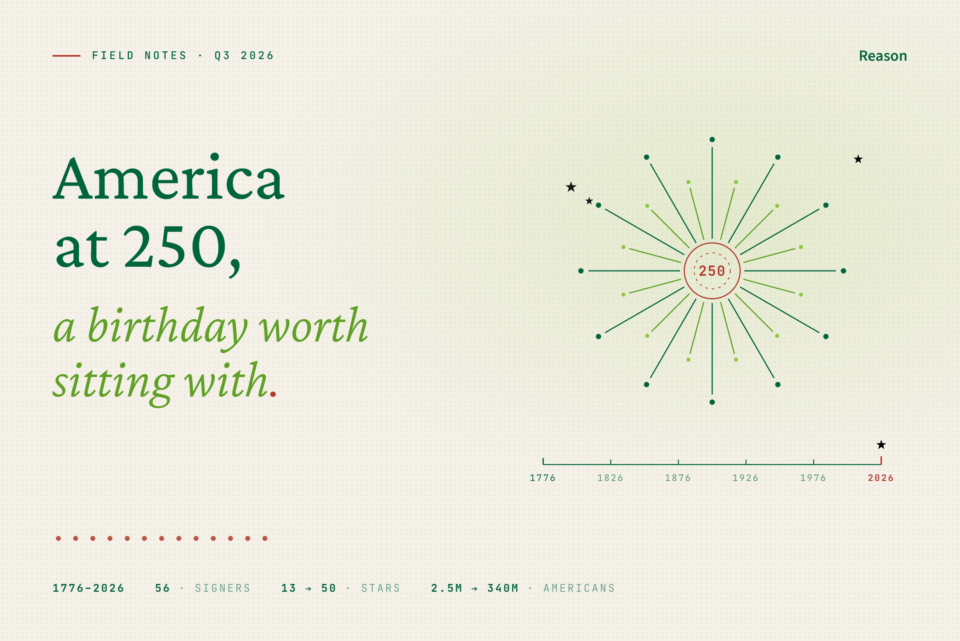
America at 250: A Birthday Worth Sitting With for a Moment
The United States just turned 250 — and the story reads surprisingly well as a series of 50-year check-ins. Founding-era population the size of…
Read more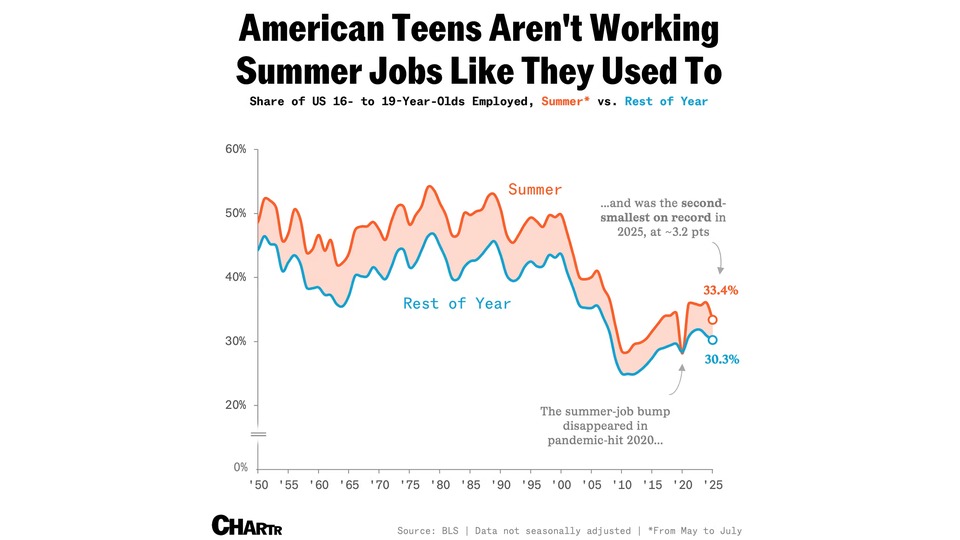
American Teens Aren’t Working Summer Jobs Like They Used To
This Chartr line chart tracks the share of U.S. 16- to 19-year-olds who were employed from 1950 through 2025, split into summer (May to…
Read more